

Exploring Bifurcation Phase Changes: Concepts, Triggers, Outcomes is a concise guide to how systems transition from one regime to another. The core idea behind Bifurcation Phase Changes is that when a control parameter crosses a threshold, a system’s qualitative behavior can shift dramatically rather than just change in magnitude. This article explains the concepts, triggers, and outcomes of Bifurcation Phase Changes, with practical guidance for analysis and design.
Key Points
- Bifurcation Phase Changes point to a qualitative shift in a system's attractor structure as a control parameter crosses a critical threshold.
- Canonical bifurcation types—such as saddle-node, Hopf, and pitchfork—illustrate distinct patterns of phase change across disciplines.
- Nonlinearity and feedback loops amplify small parameter changes into dramatic reorganizations of dynamics during Bifurcation Phase Changes.
- Detection relies on bifurcation diagrams, eigenvalue analysis, and stability tests to reveal when a transition occurs.
- Practical implications span engineering, ecology, and economics; anticipating these transitions improves safety and resilience.
Understanding Bifurcation Phase Changes
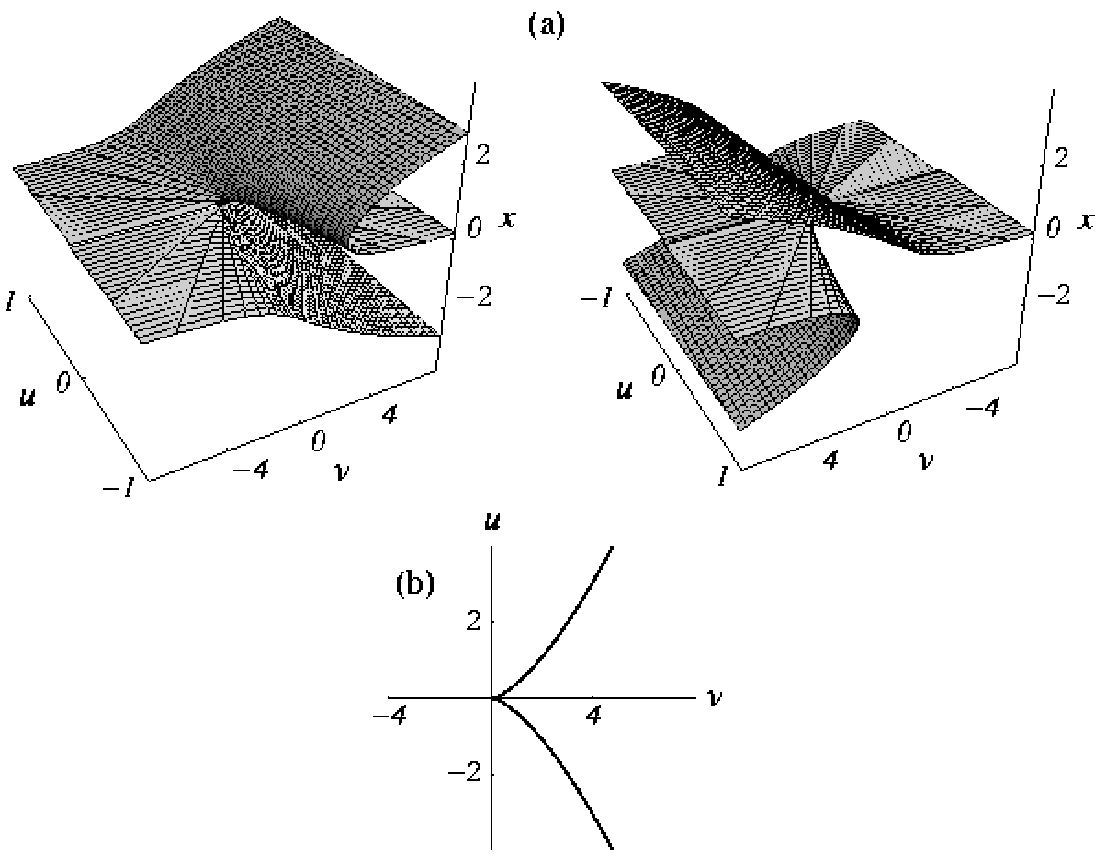
In the study of dynamical systems, Bifurcation Phase Changes describe how a system's long-term behavior reorganizes when a parameter crosses a critical value. This is more than a simple shift in numbers; it is a reconfiguration of the system's qualitative state, such as a steady state giving way to oscillations or chaos. Recognizing these phase changes helps researchers and practitioners anticipate sudden transitions in climate dynamics, electronic circuits, biological rhythms, and engineered processes.
Concepts and Definitions
A bifurcation occurs when a small change in a control parameter leads to a qualitative change in system dynamics. In the context of Bifurcation Phase Changes, this often means a stable fixed point becomes unstable, giving rise to limit cycles, multiple equilibria, or other attractors. The term emphasizes the shift in the system's phase of behavior rather than just a minor adjustment in state values.
Common Triggers
Triggers include gradual parameter drift, nonlinear feedback, external forcing, or coupling between subsystems. When nonlinearity and feedback create sensitive dependence on parameters, crossing a threshold can flip the system into a new phase of behavior. Small perturbations near the critical point can have outsized effects, making early warning essential in sensitive applications.
Outcomes and Signatures
Outcomes span steady-state bifurcations, emergent oscillations, period-doubling cascades, and, in some cases, chaotic dynamics. Signatures to look for include abrupt changes in long-term behavior, the appearance of limit cycles, changes in stability of equilibria, and shifts in spectral content. Recognizing these signatures aids in diagnosing when a Bifurcation Phase Change is underway.
What is the difference between a bifurcation and a phase change in a dynamical system?
+A bifurcation is a qualitative change in the system’s structure as a parameter varies, such as a stable state becoming unstable or the onset of oscillations. A phase change refers more broadly to a transition between distinct dynamic regimes or patterns, which is often the result of a bifurcation. In short, bifurcations are the mechanisms underlying phase changes in dynamics.
How can I tell if a bifurcation phase change is approaching in data?
+Look for indicators such as rising sensitivity to parameter changes, slowing system response near a critical point, and changes in the stability of observed states. Tools like bifurcation diagrams, spectral analysis, Lyapunov exponent estimates, and parameter sweeps can reveal approaching transitions before they fully occur.
Which fields most commonly study Bifurcation Phase Changes?
+Fields include physics, applied mathematics, engineering, ecology, economics, and climate science. Any domain that models nonlinear, interacting components can exhibit Bifurcation Phase Changes and benefit from their study for prediction and control.
What practical steps help manage Bifurcation Phase Changes in design?
+Steps include performing parameter sweeps to map stability regions, implementing robust control to maintain operation away from critical thresholds, and incorporating safety margins. In some cases, deliberately steering a system through a controlled bifurcation can be advantageous to achieve a desired regime with minimal energy or effort.